Memory and recognition
Familiar music and songs can help to evoke memories, support recognition and create meaningful connection with others in reminiscence, life review and legacy work, including creative recordings.
Northern Ireland Music Therapy Trust
Music therapy can support older adults and people living with dementia and Alzheimer's by creating meaningful moments of connection, comfort, communication, and emotional expression. It can help people reconnect with memories, relationships, and a sense of identity, while also supporting wellbeing in care and community settings.


Dementia and later-life care involve more than clinical needs alone. Music therapy can help create moments of recognition, joy, comfort, and emotional connection that support both the individual and the people around them.
Familiar music and songs can help to evoke memories, support recognition and create meaningful connection with others in reminiscence, life review and legacy work, including creative recordings.
Music therapy can offer a safe way for facilitating self-expression, improving self-esteem and identity, providing emotional support and enhancing mood and quality of life even when words become difficult.
Music therapy can help reduce isolation by promoting social inclusion and interactions with others, strengthen bonds with family and carers. This can also facilitate increased communication, focus, and responsiveness with others through songs and musical activities
Music therapy can help create calm, support routine, and provide reassurance in moments of confusion, anxiety, or agitation.
This service may support people living with dementia, older adults experiencing isolation, emotional distress, reduced communication, or changes in cognition, as well as the wider care environments around them.
Sessions can be delivered in residential care, nursing homes, hospitals, day services, community settings, and other places where older adults may benefit from relational, music-based therapeutic support.
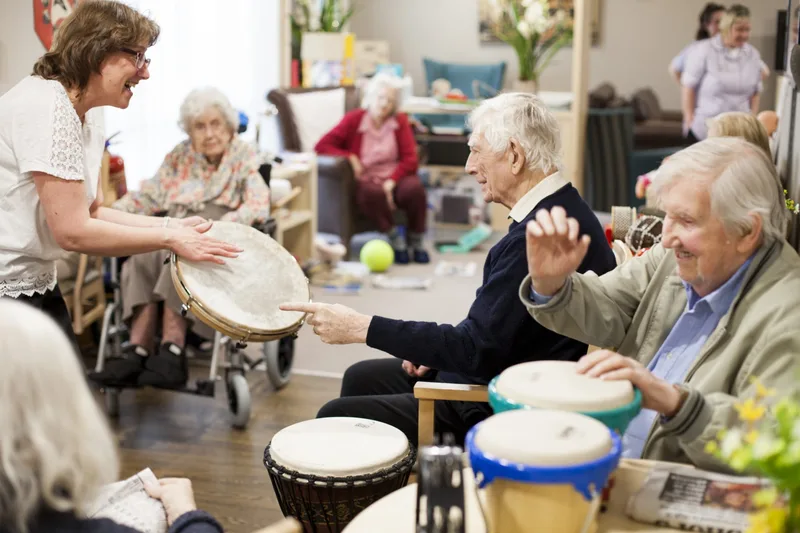
A song, a melody, or a shared rhythm can sometimes reach places that spoken language cannot. Music therapy can help people reconnect with memory, emotion, identity, and relationship in ways that feel immediate, human, and deeply personal.
Discuss a referral
We begin by understanding the person, the setting, and the goals of support.
We consider preferences, presentation, communication, emotional needs, and therapeutic fit.
Sessions are tailored to support connection, comfort, communication, and wellbeing.
Support is reviewed collaboratively so it remains meaningful, responsive, and person-centred.