

Northern Ireland Music Therapy Trust
Music Therapy
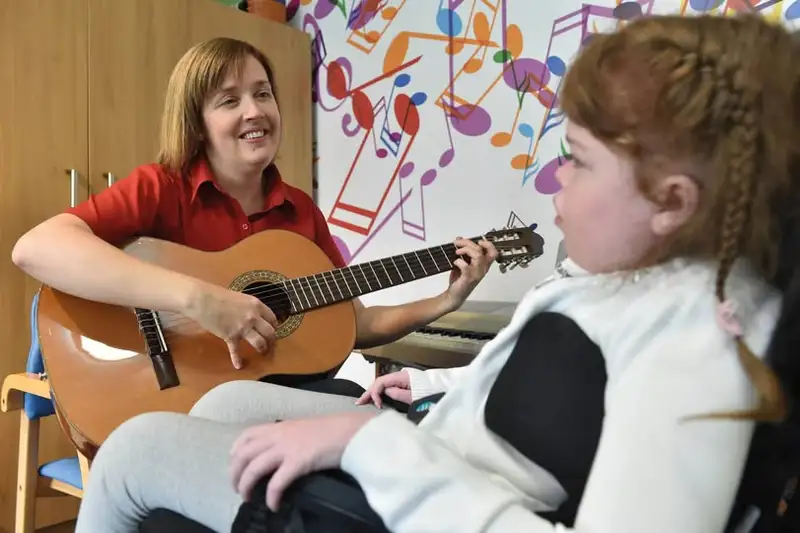
Music therapy is a safe, evidence based clinical intervention delivered by HCPC-registered music therapists. Sessions are tailored to the person and may include live music-making, singing, listening, improvisation, songwriting, or sensory sound work.
Every journey is different, but our process helps individuals, families, schools, and partner organisations understand what to expect from referral through to review.
01
A family member, referrer, school, health professional, or organisation gets in touch to tell us about the person’s needs, strengths, and current situation.
02
We explore communication style, emotional needs, sensory responses, and how the person engages with music therapy.
03
Sessions are planned around agreed clinical goals and these are adapted to meet the clients needs. They may focus on expression, connection, confidence, regulation, participation, or relationship-building.
04
Progress is reviewed with the individual, family, carers, or referrers so we can decide whether to continue, adapt, transition, or bring therapy to a planned close.
A therapeutic process centred on relationship, safety, and individual needs
First Step
The process usually begins with a conversation. We listen carefully to what is happening, what support is already in place, and what the person, family, school, service, or referrer hopes music therapy might help with.
At this stage, we also think about practical needs such as setting, access, communication, risk, safeguarding, and whether individual or group work may be most suitable.
Understanding the person
Assessment helps us understand how a person responds to sound, rhythm, instruments, voice, and shared interaction.
We look at strengths as well as challenges, then agree realistic goals. These may relate to speech, communication, motor skills, emotional regulation, confidence, engagement, sensory regulation, social interaction, or wellbeing.
The therapeutic work
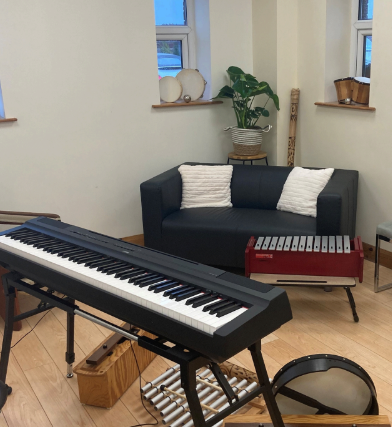
Sessions are tailored to the person. A therapist may use singing, improvisation, accessible instruments, songwriting, listening, movement, or sensory sound play, depending on what is appropriate to meet the clients need.
Some people benefit from structure and repetition. Others need space for spontaneity and expression. The therapist adjusts the music and the pace of the session so the person can take part in a way that feels manageable, safe, and meaningful.
Measuring progress
Music therapy is reviewed over time. We reflect on what has changed, what still feels difficult, and whether goals need to be adapted. Feedback from the person, family, carers, or referrers is an important part of this.
Therapy may continue, evolve, move into a new phase, or come to a planned ending. The aim is always to provide support that is purposeful, ethical, and responsive to the person’s needs.
We can talk you through the process, who music therapy may support, and what a referral or partnership could look like.